Oral Hygiene
Brushing
Plaque and debris from food stick to the surfaces of your teeth, especially around brackets, bands, and wires and can cause tooth decay and gum disease. That’s why it’s important to keep your teeth and all parts of your braces clean at all times.
Braces won’t cause you to get more cavities, but you will need to spend extra effort to keep your teeth and mouth clean while in treatment. You may need to use more than one cleaning device to do this.
When you first begin flossing and brushing properly, gums that have not been kept clean may become sore and bleed. After a few days of excellent hygiene, your gums should stop bleeding and heal. If they don’t, please call us. Healthy, clean gums don’t bleed!
Brush after every meal and before going to bed. Use a soft toothbrush and moderate force and use the following method:
- Place the toothbrush at an angle so that you feel the bristles under the gumline.
- Move the brush in small circles, vibrating the brush on each area of each tooth above and below the archwire.
- Brush each tooth about ten seconds.
- Work systematically from one side of the mouth to the other.
- Be sure to brush all surfaces of all your teeth.
- Push the bristles under the wires and between the teeth.
- Always brush within ten minutes after eating and before bed.
- Use a fluoride rinse once a day.
- Spend enough time brushing to make sure you clean all your teeth properly.
- When you’re finished, your braces should be shiny and your gums should be firm and light pink.
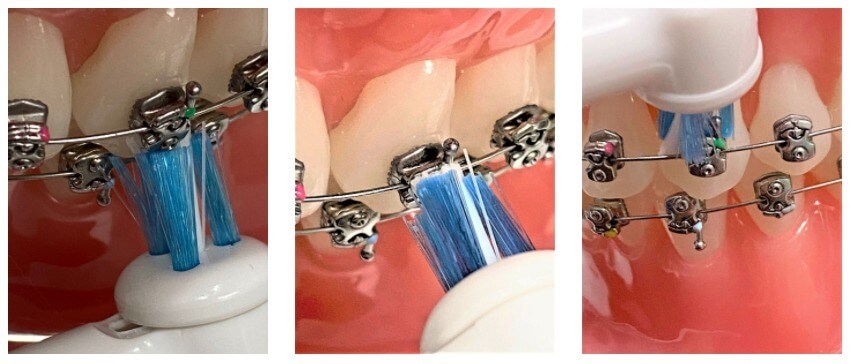
We recommend that you invest in an electric toothbrush, such as an Oral-B brand electric toothbrush. We have found the hygiene results from an electric toothbrush to be superior to those accomplished with a regular toothbrush.
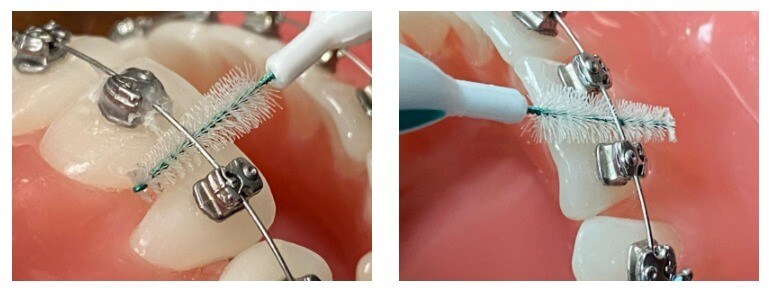
We recommend that you use an interdental brush to clean around your bonded appliances and under your archwires. The advantage of an interdental brush is that it reaches areas, such as between teeth, which your toothbrush cannot. With an interdental brush, use slow, repetitive movements, work systematically and be sure to clean all parts of your braces.
Flossing
Dental floss is a nylon thread specifically created to remove plaque and food particles that are trapped between teeth. Just like an interdental brush, flossing reaches the parts of your teeth and braces that your toothbrush cannot. Here are a few flossing tips:
- Cut a piece of floss about 12 inches long, enough to wrap around the middle finger of each hand, or to use with your floss threader.
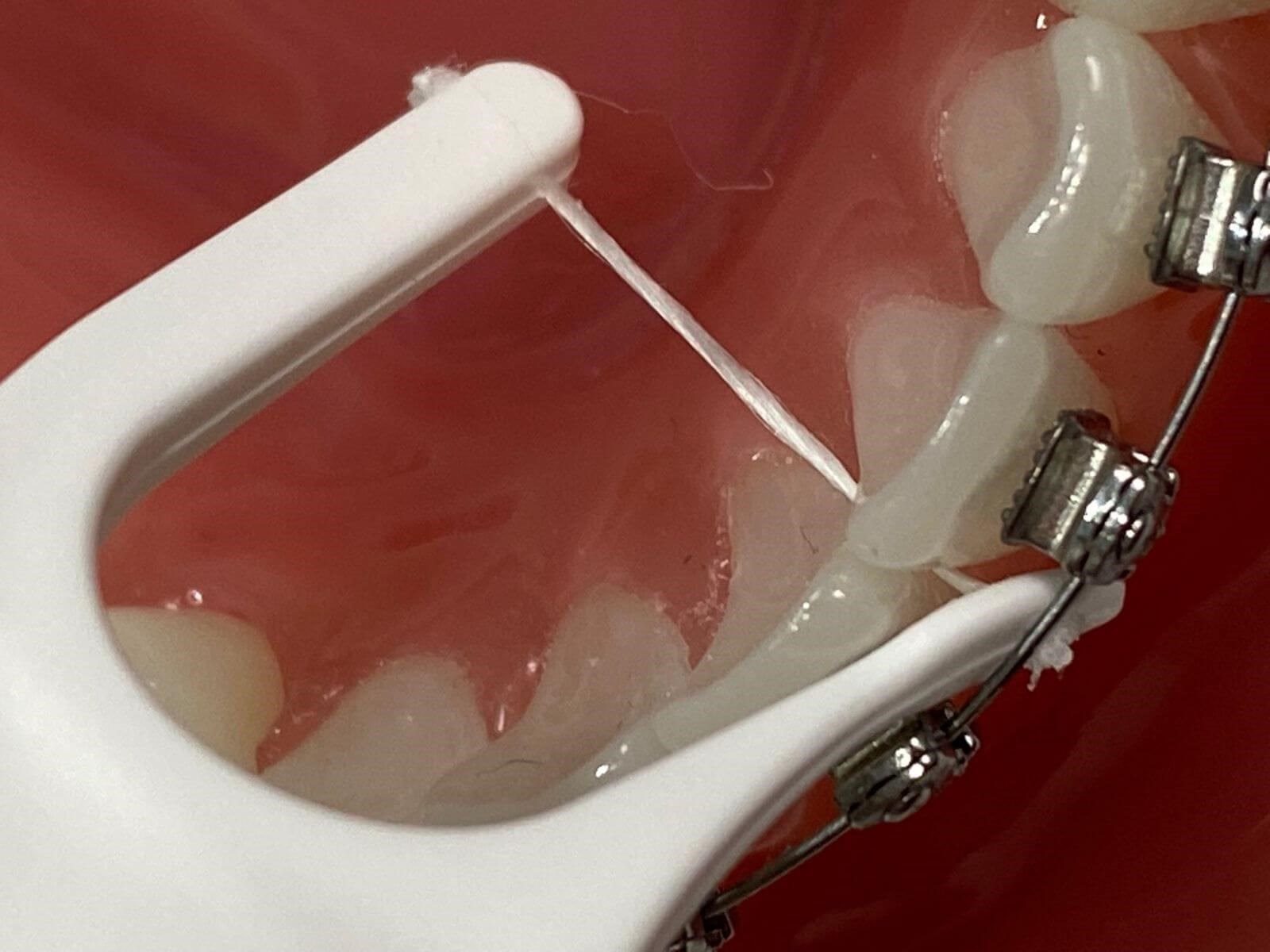
- Using thumbs and index fingers, insert the floss between your teeth with a gentle, back and forth movement. Floss must be threaded under the archwire before it is passed between your teeth.
- Curve the floss in a C-shape around each tooth, and floss up and down.
- Don’t snap the floss or use heavy pressure. This can damage your gums.
- You can change the position of your hands and fingers to maintain a good grip on the floss.
- Be sure to floss all your teeth every day, including the back ones.
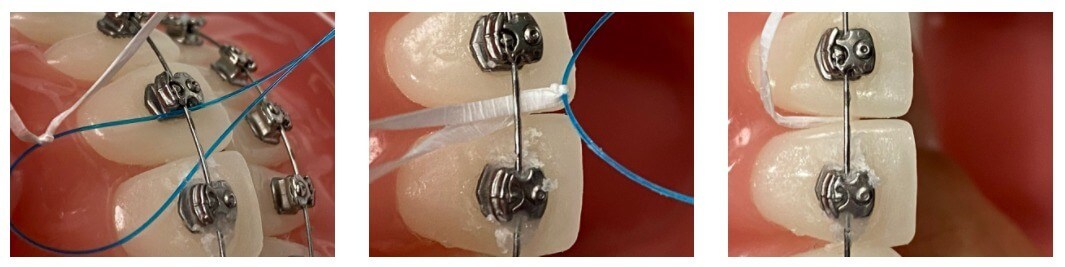
Flossing may be more difficult when you have braces and wires, but it’s worth the effort to keep your teeth clean and breath fresh. You may find flossing easier if you use a floss threader to get around your wires, but be careful not to put too much pressure on the wires.
You can also use Platypus, a special floss for flossing with braces.
Cleaning a Removable Appliance
A removable appliance, such as treatment with Invisalign or removable retainers, will accumulate plaque and food particles just like your teeth do. Clean your removable appliances daily with a toothbrush.
When you’re not using your appliance, store it in the retainer case. Taking care of your appliance and keeping it clean will help prevent plaque build-up and oral infections and will keep your appliance tasting fresh.
Never use hot water to clean your appliance. Be gentle with your appliances... they’re breakable. If damaged or broken, your appliance will have to be replaced. This delay might mean a lengthened treatment time!
Antibacterial Mouthwash
For inflamed gums and cheeks, we recommend Peroxyl, a hydrogen peroxide antiseptic mouth rinse. Peroxyl helps to fight infection, decreases irritation and will help your mouth heal. Peroxyl will also help canker sores, cheek bites and other minor temporary injuries to your mouth tissue.
To use Peroxyl:
- Rinse with two teaspoons (half a capful) of Peroxyl for one minute, then spit the liquid out.
- Use up to four times a day, after brushing, which should be after every meal and before you go to bed.
Plaque HD Toothpaste
Dr. Mihalik recommends the use of Plaque HD Toothpaste. Plaque HD Toothpaste is the first professional-grade plaque identifying toothpaste. Infused with fluoride and disclosing agents that help color and identify plaque build-up on teeth, this convenient, all-in-one product allows patients to target any areas of plaque build-up that may have been missed during brushing. Ask about Plaque HD toothpaste at your next appointment visit.
Fluoride
Topical fluoride is used during orthodontic care to help prevent cavities, to re-mineralize tooth enamel and act as an antibacterial agent. We recommend using a topical agent with 1.1% sodium fluoride during your orthodontic treatment, but not as a substitute for toothpaste and good brushing and flossing habits.
Apply a thin ribbon to your teeth with a toothbrush at bedtime. Leave it on for one minute, then spit it out. Don’t drink or eat for at least 30 minutes after using topical fluoride because that will dilute the effects.

